How Hand-Cast Brass Bags Are Made: From Molten Metal to Your Wardrobe

When you hold a hand-cast brass bag, you're holding the result of a process that begins not on a factory floor, but in a workshop where molten metal is poured into a carefully built mold, shaped, cooled, and refined entirely by hand. For anyone curious about where these pieces come from and what makes them different from standard accessories, here is a clear, step-by-step look at how a handmade brass handbag is actually made.
What is a Hand-Cast Brass Bag?
A hand-cast brass bag is a structured metal bag formed through a casting process, most commonly lost-wax casting, rather than machine stamping, die-cutting, or factory forming. The result is a bag with genuine sculptural depth: surface relief, defined edges, and dimensional volume that mechanically produced bags simply cannot replicate.
The term "hand-cast" refers specifically to the fact that the mold-making, pouring, and finishing stages all involve direct human skill. Each piece carries the mark of the artisan who made it, not the uniformity of a production line.
A Technique Older Than Fashion Itself
Lost-wax casting is one of the oldest metalworking methods known to humanity. Archaeological records trace it back to at least the 3rd millennium BCE. In South Asia, the technique is linked to some of the earliest known metal sculptures, including pieces from the Indus Valley civilization dated roughly to 2300–1750 BCE.
In India, this tradition remains alive as a living metalworking practice passed down across generations in multiple regions, where artisans continue to create cast objects through wax modeling and metal pouring. When you look at a handmade designer bag made with this method, you are looking at a technique that has outlasted empires, trends, and fashion cycles.
The Step-by-Step Process: From Model to Minaudière
Understanding how a handmade brass handbag is made helps explain why it looks and feels the way it does. Here is how the process unfolds:
Step 1: The Model (Wax Sculpting)
The process begins with a model, typically sculpted in wax. Wax is used because it captures precise detail and can be shaped with a level of accuracy that translates directly into the final metal form. At this stage, the artisan determines the bag's form, motifs, surface patterns, and structural proportions.
Step 2: The Mold
Once the wax model is complete, it is encased in a heat-resistant shell or investment material. When heat is applied, the wax melts out, leaving behind a hollow cavity that is an exact negative of the original model. This is the defining feature of lost-wax casting: the mold is shaped by the wax, which is then removed ("lost").
Step 3: The Pour
Molten brass is poured into the empty cavity. The metal fills every contour of the mold, the fine surface texture, the relief patterns, the structural edges. The piece is then left to cool and solidify at its own pace.
Step 4: Release and Initial Refinement
Once cooled, the mold is broken away or removed. What emerges is a raw cast, the basic form of the bag, along with extra channels of metal (called sprues) that formed during the pour. These are carefully cut away, and the surface is inspected for any imperfections from the casting process.
Step 5: Hand Finishing
This stage is where the real value of a luxury handcrafted bag is built. Artisans file, grind, smooth, and polish the surface by hand, correcting edges, sharpening details, and achieving the final finish. Depending on the intended look, this may result in a high-polish surface, a brushed texture, or an antiqued appearance. No two pieces finish identically, which is part of what makes each one a unique statement handbag.
Step 6: Assembly
The finished cast body is then fitted with functional components: hinges, clasps, closures, chains, and interior linings where applicable. These elements must align precisely, unlike leather, metal does not stretch or adjust. Proper engineering at this stage determines whether the piece works as a wearable bag, not just a decorative object.
Why Hand-Cast Brass Bags Cost More Than Mass-Produced Alternatives
The pricing of a handmade brass handbag reflects its production reality, not a margin strategy. Several factors contribute to the cost:
Multi-stage production: The process moves through model-making, mold-building, metal pouring, cooling, sprue removal, hand finishing, and assembly, each stage requiring separate skill and time.
Mold economics: Many casting approaches require building a new mold for each piece, or result in single-use molds. This eliminates the economies of scale that mass manufacturing depends on.
Finishing labor: The polished, wearable surface of a well-made cast brass bag is earned through hours of hand refinement. This labor is not reducible without lowering quality.
Material weight: Brass is a dense material. Its weight contributes to the bag's substantial, quality feel, but it also affects handling, hardware tolerances, and shipping considerations.
Small-batch production: These are not mass-run units. The limited quantities produced per design are a structural reality of the craft, not a marketing device.
How to Care for a Brass Bag
Brass is a living metal, it develops character over time rather than degrading in the way fabric or synthetic materials might. A few straightforward care practices extend the life of any luxury handcrafted bag made from brass:
- Keep the piece dry and store it away from direct moisture when not in use.
- Use a soft, dry cloth to wipe down the surface after wearing.
- For tarnishing, a gentle brass cleaner or a mixture of mild soap and warm water, applied carefully with a soft cloth, can restore brightness.
- Many owners choose to let their brass pieces develop a natural patina over time, which deepens the aged, artisanal character of the bag.
A Note About the Designer Minaudière Bag
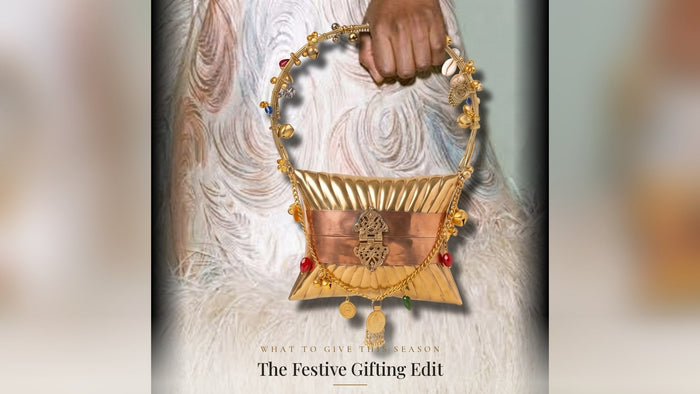
Within the category of hand-cast brass bags, the minaudière is one of the most recognized forms. A designer minaudière bag is a small, structured evening clutch, rigid in form, with a clasp or hinged closure. The minaudière format is particularly well suited to the hand-casting process because its small size allows for precise control over surface detailing, and its structured shell benefits from the dimensional rigidity that cast metal naturally provides.
When worn as a party clutch at a formal event, a well-made minaudière carries a presence that fabric alternatives cannot replicate, it reads as an object with history, weight, and intention.
About Gullye
Gullye is a slow luxury house built around the principle that genuine craft deserves careful curation. The brand sources its pieces directly from skilled artisans working in traditional workshops, places where techniques like lost-wax brass casting and flush stone-setting and kiln-fired enamel jewelry-making are still practiced with the same integrity they have been for generations. Gullye's collection of handmade designer bags spans hand-cast brass minaudières, shell bags, and block-printed styles, each selected for its connection to a real craft tradition rather than a trend cycle. The brand's philosophy is straightforward: pieces should be held onto, not replaced.
For a complete buyer-focused breakdown of what to look for before purchasing a handmade brass bag, read our complete guide to handmade brass bags. To understand how genuine artisan work differs from mass-market labelling, see What Makes a Bag Truly Artisan?
Final Thoughts
A hand-cast brass bag is not a fashion accessory in the conventional sense. It is the outcome of a process that involves ancient technique, material knowledge, and hours of skilled hand labor, from the sculpting of a wax model to the final polish that makes the surface ready to wear. Understanding that process changes how you see the finished piece. The weight, the texture, the small variations between one bag and another, these are not incidental. They are the evidence of how it was made.
Frequently Asked Questions
How is a hand-cast brass bag made?
A hand-cast brass bag is made in 7 stages through the lost-wax casting process: (1) A wax model is sculpted with the full design. (2) The wax is encased in ceramic. (3) The wax is melted out, leaving a hollow mold. (4) Molten brass is poured into the cavity. (5) After cooling, the ceramic is removed and excess metal cut away. (6) Artisans hand-finish the surface by filing, grinding, and polishing. (7) Functional components — hinges, clasps, chain straps, interior lining — are assembled. The full process takes 22–30 days per bag depending on design complexity.
What is lost-wax casting?
Lost-wax casting (cire perdue) is a metal-forming technique dating to the 3rd millennium BCE. A wax model is built to the exact desired form, then encased in heat-resistant ceramic. When heated, the wax melts and drains out — hence 'lost wax' — leaving a hollow cavity in the precise shape of the original. Molten metal is poured in, filling every contour. In India, this technique is practiced through the Dhokra (Dokra) craft tradition, which is the method used to produce Gullye's hand-cast brass bags.
Why do hand-cast brass bags cost more than mass-produced bags?
The cost reflects real production requirements: a separately modelled and built mold for each piece; multiple finishing stages each requiring skilled hand labor; small-batch production of 3–5 pieces per month with no economies of scale; and dense brass material which affects handling and hardware tolerances. Each bag takes 22–30 days to produce. Gullye's brass bags start at $245, reflecting genuine production cost rather than a branding premium.
How do you care for a brass bag?
Keep the bag dry and store it away from direct moisture when not in use. Wipe the surface with a soft, dry cloth after wearing. For tarnishing, use a gentle brass cleaner or mild soap and warm water applied with a soft cloth. Many owners let their brass bags develop a natural patina over time — this deepens the artisanal character of the piece. Avoid harsh chemical cleaners, which can strip the finish.
How long does it take to make a hand-cast brass bag?
Gullye's hand-cast brass bags take between 22 and 30 days to make per piece. The Dholak Heirloom Minaudière takes 22 days. Most pieces in the collection take 25 days. The Lattice Jali Box Bag — which requires individual hand-piercing of each aperture — takes 28 days. The Kundan Mosaic Minaudière, which adds traditional Kundan stone-setting after casting, takes 30 days. All pieces are made in small batches of 3–5 per month.
Artisan pieces, made by hand
Every Gullye bag is made by hand in small editions, using techniques with centuries of precedent.
Shop the collection →