How Our Jewelry Is Made: Flush-Set Stones and Kiln-Fired Enamel

Two crafts meet in Gullye jewelry, and both are done entirely by hand: stones set without glue, and enamel fired in a kiln. They are separate skills, often practiced by separate specialists, and some of our pieces carry one, some the other, and some both. Here is what actually happens at the bench.
How are the stones set without glue?
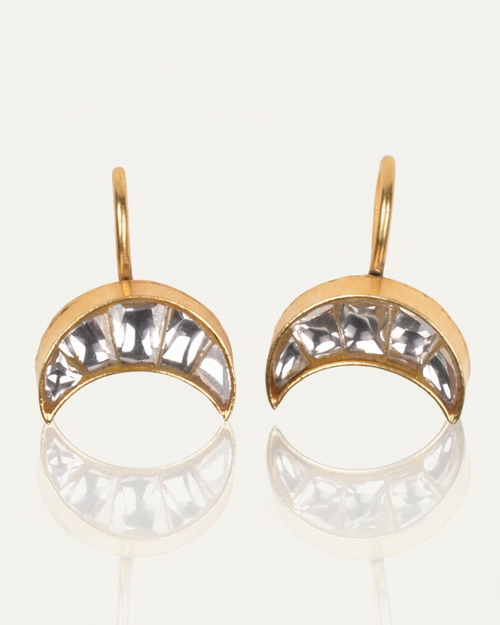
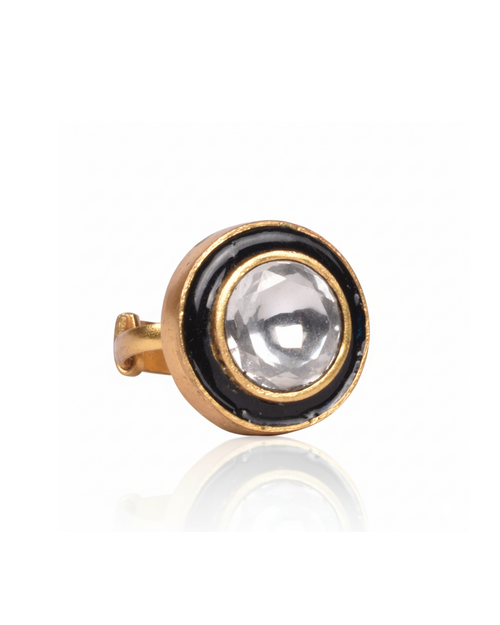
The setting technique works like this. A metal framework is formed with a cavity for each stone. The cavity is packed with a traditional supporting mixture, commonly shellac and antimony, and warmed so it will hold the stone steady. Each stone is pressed into place, and then soft, highly refined gold is worked around its edge, a little at a time, until the metal itself grips the stone. As everything cools, the setting locks. No adhesive is involved at any point, which is why these settings survive decades of wear.
Run a finger across a finished piece and you feel one smooth surface: stone and metal flush with each other. That is the test, and the point.
How is the enamel made?
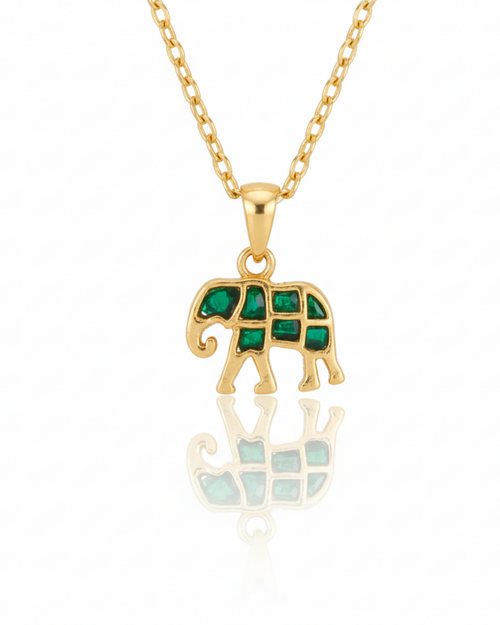
The enamel work is closer to painting than to jewelry-making. The design is engraved into the metal so the color has grooves to sit in. Ground enamel is placed into those recesses, then the piece goes into the kiln, where heat fuses the color into a glass-like layer bonded to the metal. Deeper colors take several fill-and-fire rounds. A final polish brings up the gloss. Because the color is fired in rather than painted on, it does not chip away like surface paint.

Why does handwork like this cost what it costs?
Because you are paying for human hours, not machine time. A machine can stamp a thousand identical pendants in a day. A hand-set, hand-enameled piece takes days of one person's full attention, and the finishing, the alignment, the layered firings cannot be rushed without showing. The price is the time, and the time is what makes the glow.
How do you spot quality?
- Clean stone seating. Stones sit flush and symmetrical; edges look intentional, never proud or sunken.
- Backside finishing. Turn the piece over. Hand work does not stop where the eye usually does.
- Enamel clarity. Smooth gloss, crisp color boundaries, never muddy or bubbled.
- Transparency of source. The maker can tell you who made it, where, and how. We can, and we do.
Every Gullye jewelry piece is hand-finished in small batches using these two crafts. See them in the Heritage Jewelry collection.
Carry the heritage jewelry
Kundan set and meenakari enamelled by hand, each piece carries a motif drawn from nature and the old courts.
Shop all heritage jewelry →