

The Cayenne


10% off your first piece. Join the list and we'll send your code.
Check your inbox. Your code is on its way.
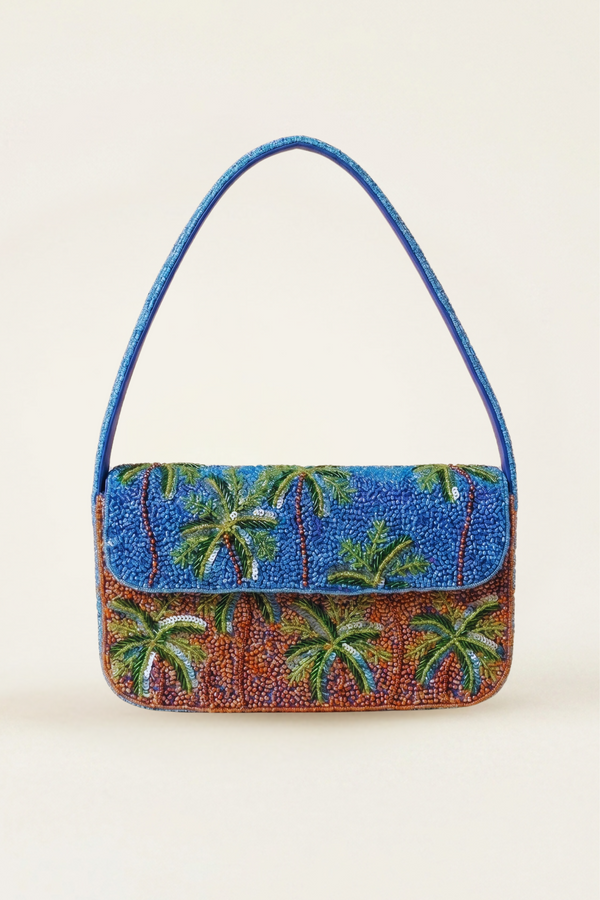
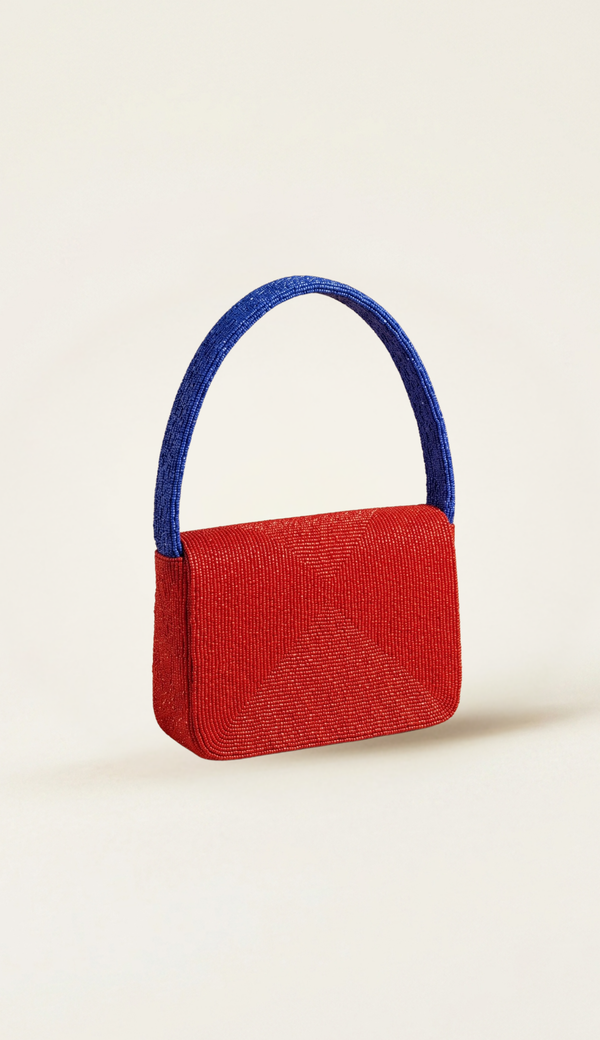
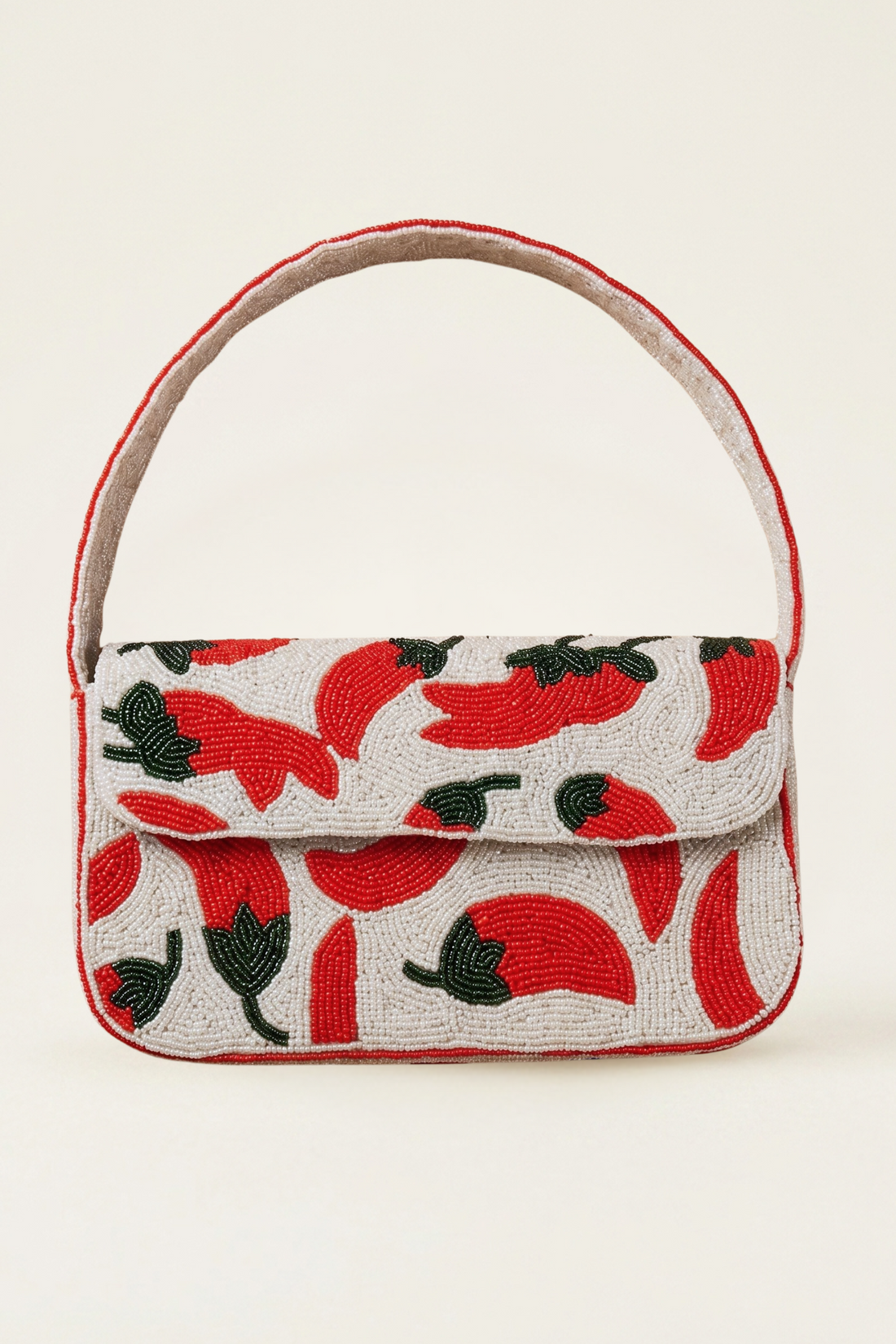
The chili pepper has crossed more borders than any other ingredient, from the Americas to every kitchen in the world in two hundred years. This bag carries that same energy: a cream ground with red and green hand-beaded chilis, the kind of piece that starts a conversation before you say a word.
- Technique
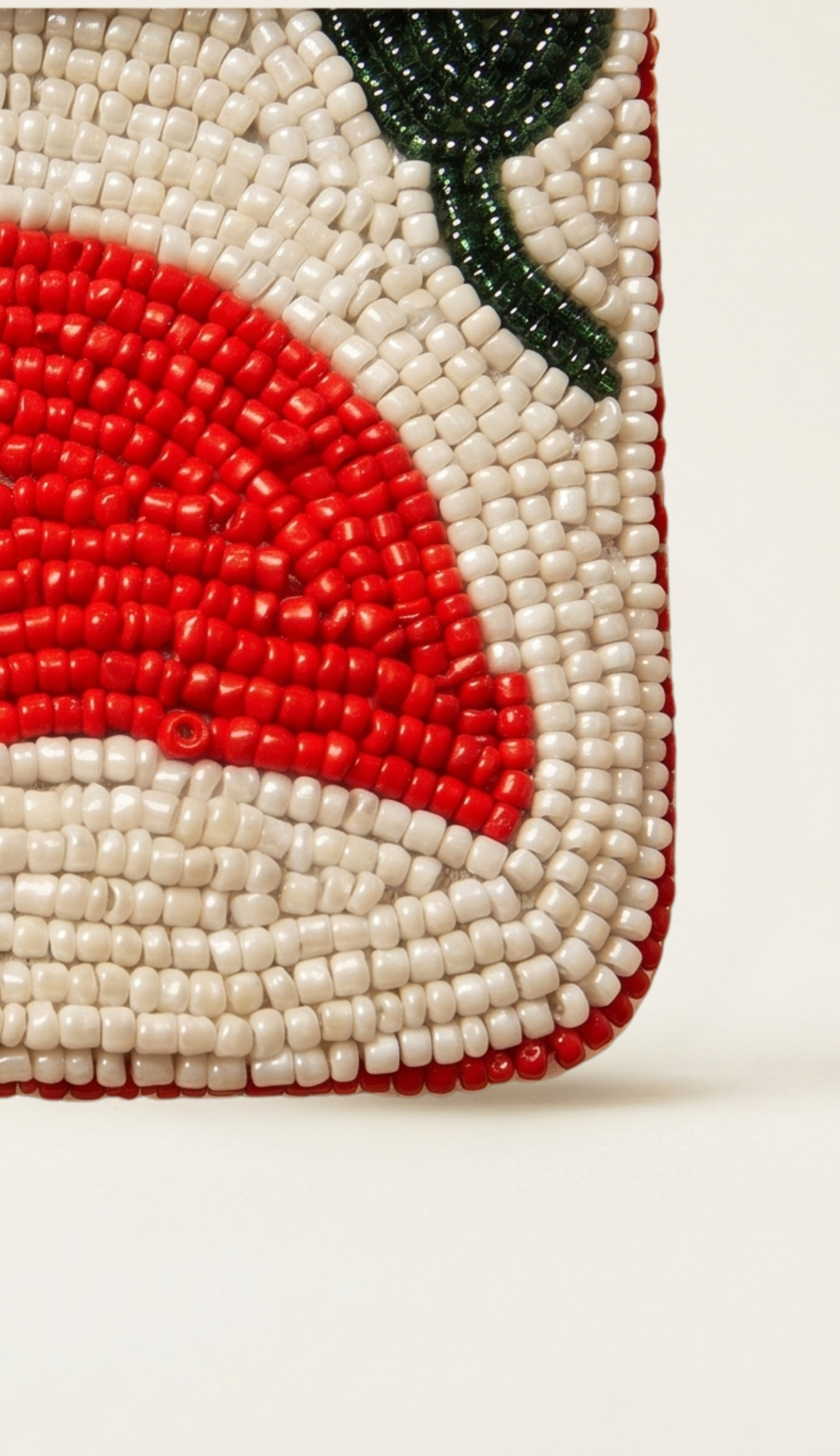
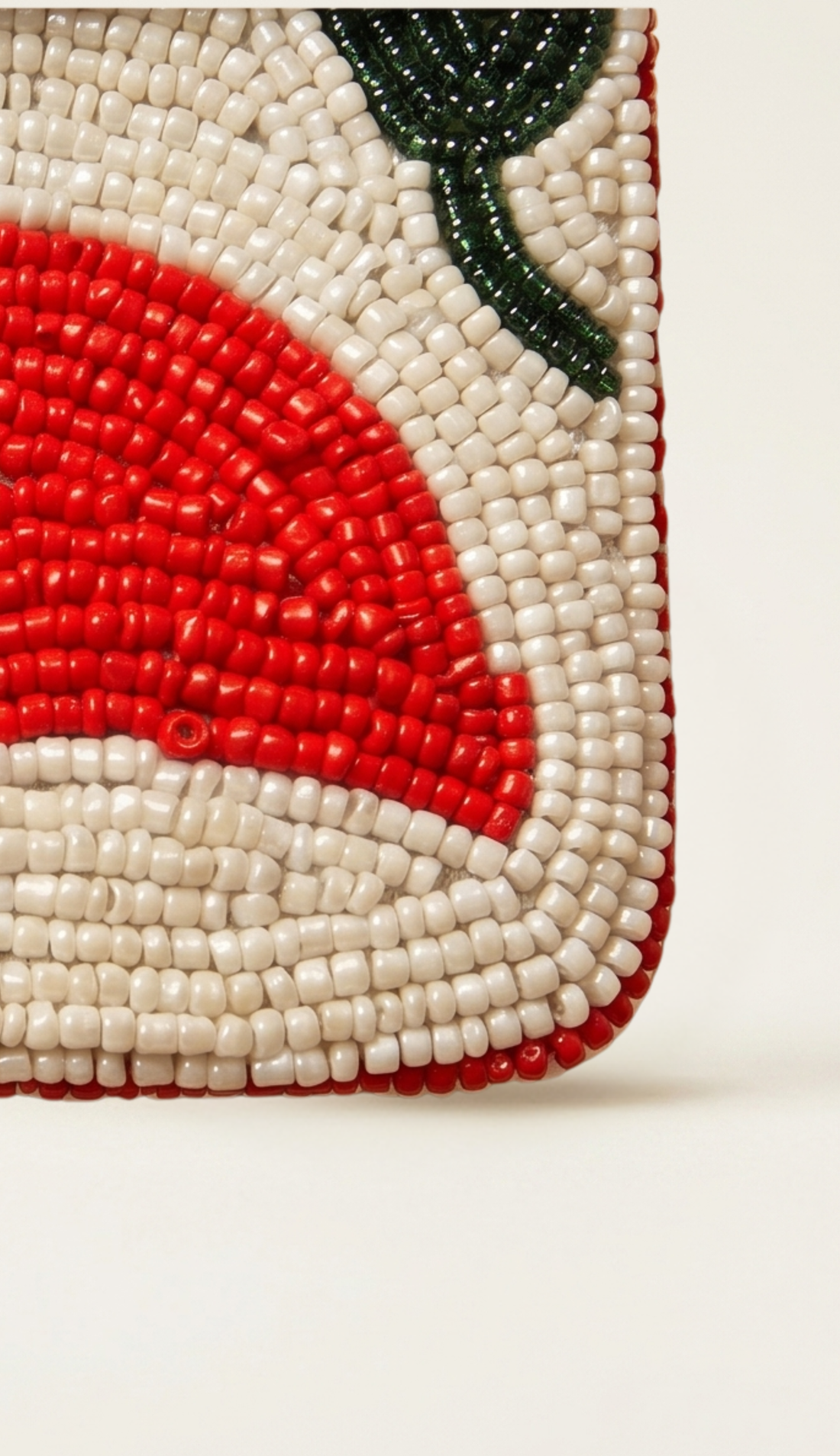
- Hand-beaded, glass seed beads on cotton
- Motif
- Chili pepper botanical in red, green, and cream beadwork
- Base color
- Cream ground
- Dimensions
- 8"L × 2"W × 6"H
- Closure
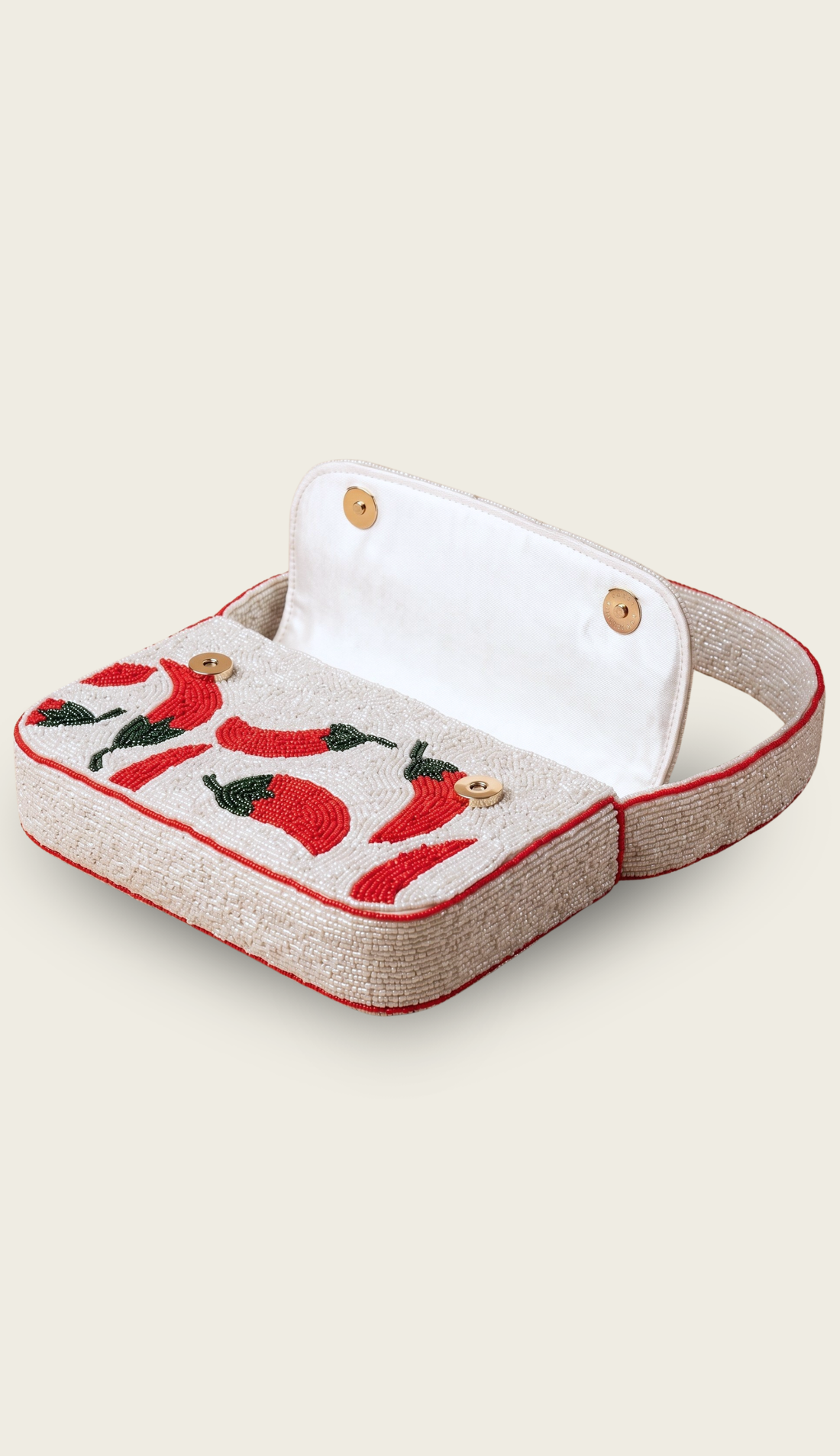
- Single flap
- Interior
- Inner zip pocket
- Exterior pocket
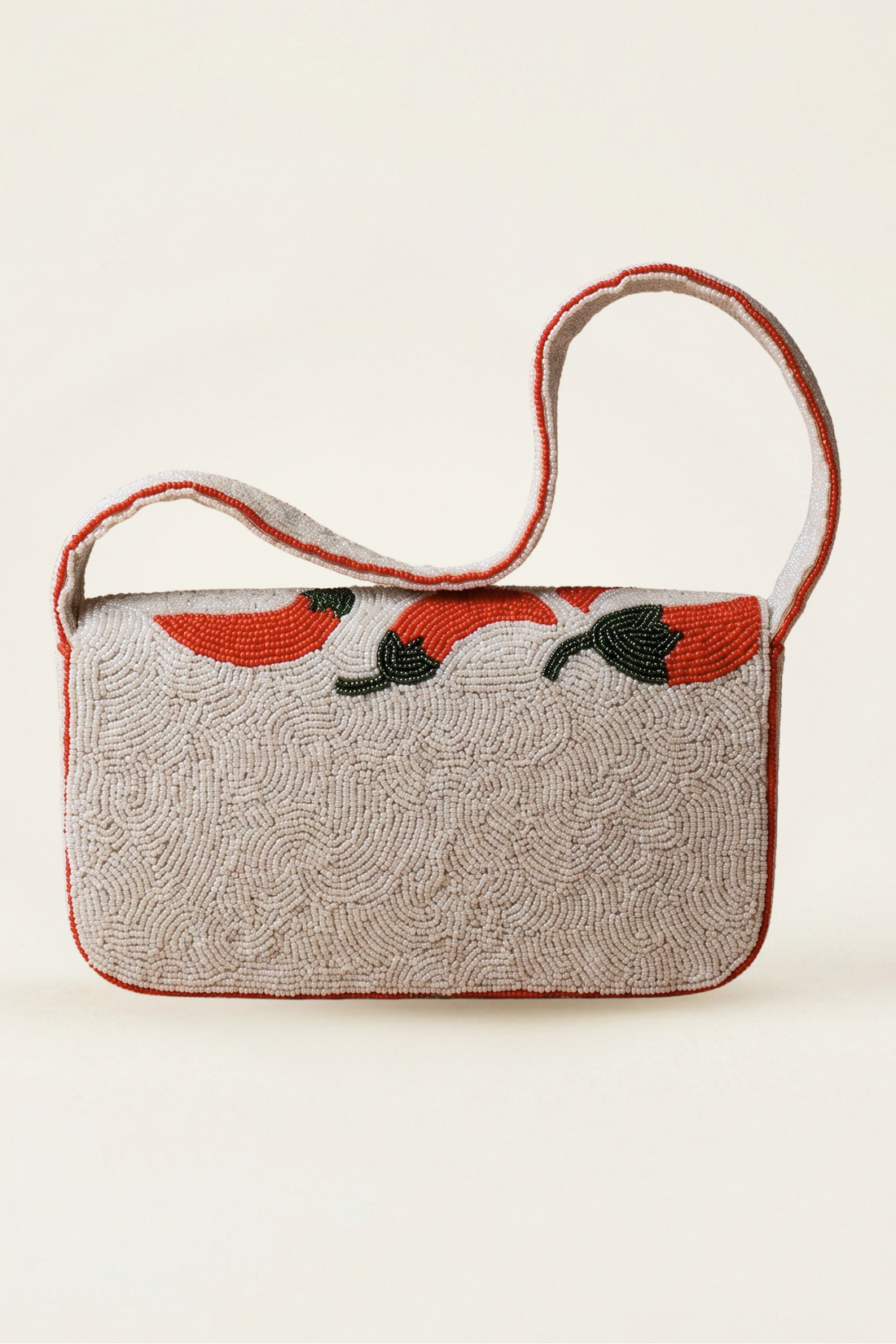
- Back slip pocket
- Detail
- Cloth piping throughout
- Origin
- Handmade in India
- Production
- Small batch, each piece unique
Dispatched within 1 to 2 business days by FedEx Ground, arriving in 2 to 7 days across the U.S. Your tracking follows the moment it leaves us. Should it ever need to come home, you have 30 days from delivery.
Why is it called The Cayenne?
Cayenne is a variety of chili pepper and a city in French Guiana where the chili first became known to European traders. The name references both the ingredient and how it traveled from the Americas to the rest of the world.
What does hand-beaded mean?
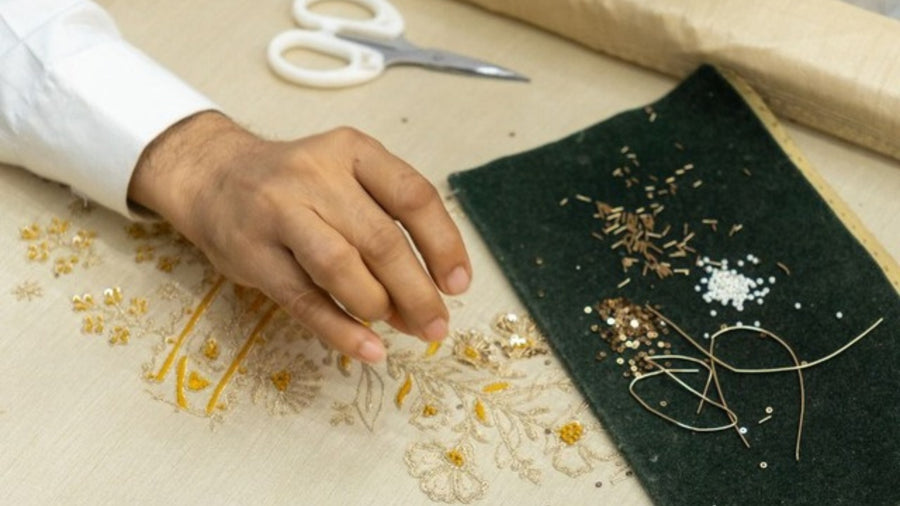
Every bead was placed individually by hand with a needle and thread. The chili motif is thousands of small stitches made by a single artisan, with no machine involved.
What fits inside?
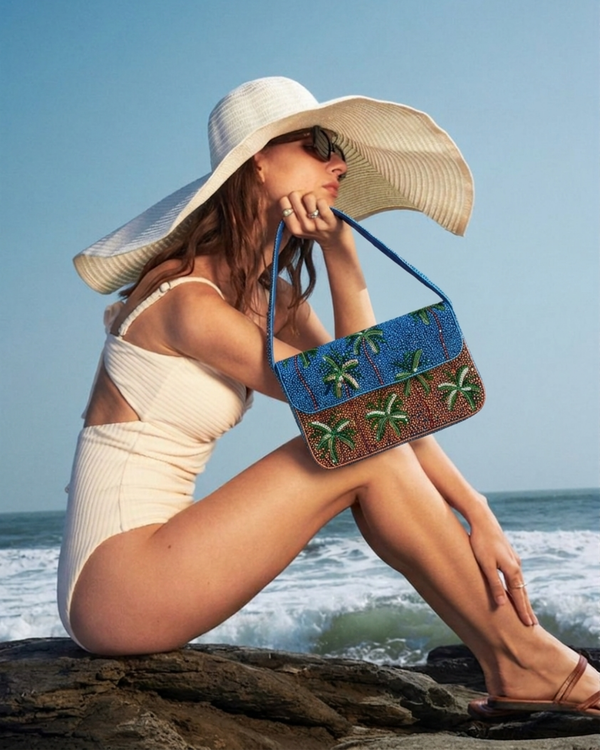
At 8" wide and 6" tall it is compact but capable, holding a phone, wallet, keys, lipstick, and cards. An inner zip pocket secures valuables and a back slip pocket keeps essentials in reach.
Is every bag identical?
No. Because each is beaded by hand, the color density and bead placement vary slightly between pieces. On a cream ground those variations are especially visible, and yours is the only one that looks exactly like it.
The story
The chili belongs to everyone and to no single tradition. It appears in sixteenth-century European herbals, hangs in bundles outside kitchens in New Mexico, is embroidered onto textiles in Oaxaca. The artisan who beaded the Cayenne understood that. These peppers are not a novelty; they are a record of something that traveled the whole world and made itself at home everywhere it landed.
The Cayenne is the smallest of the beaded bags and the most densely worked. The cream ground forgives nothing, every bead of color has to be exact, and red on cream is the most demanding combination a beader can work. The artisan who made yours knew that and chose it anyway.
The most-traveled ingredient in history. Carried by you.
You may also like
Recently viewed
A little welcome
Complimentary U.S. shipping on every order
30-Day Returns
No questions asked
Authenticity Guaranteed
Genuine shell & hand-cast brass
Secure Checkout
Encrypted payment
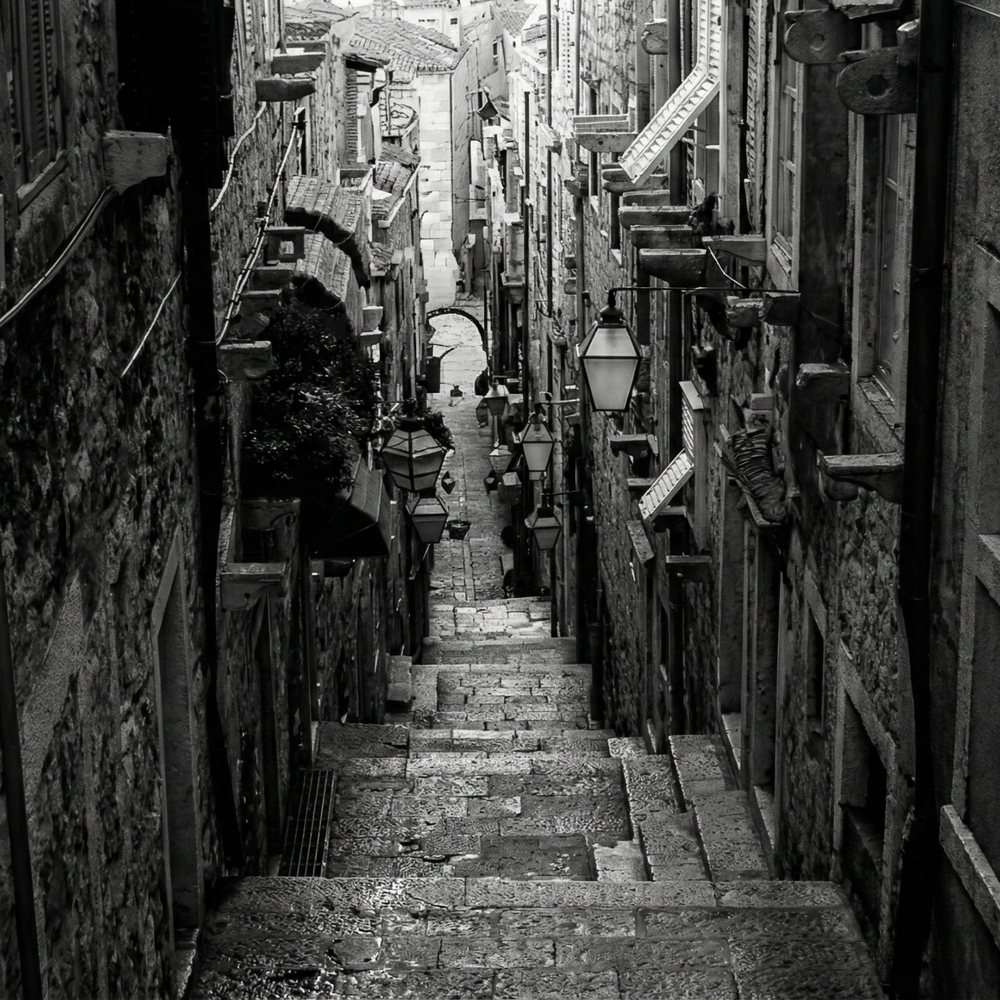
What is Gullye
Gullye finds its soul in the forgotten lanes, where quiet hands shape beauty that the world often overlooks. We bring these stories forward not as relics of the past, but as living treasures meant to be cherished.
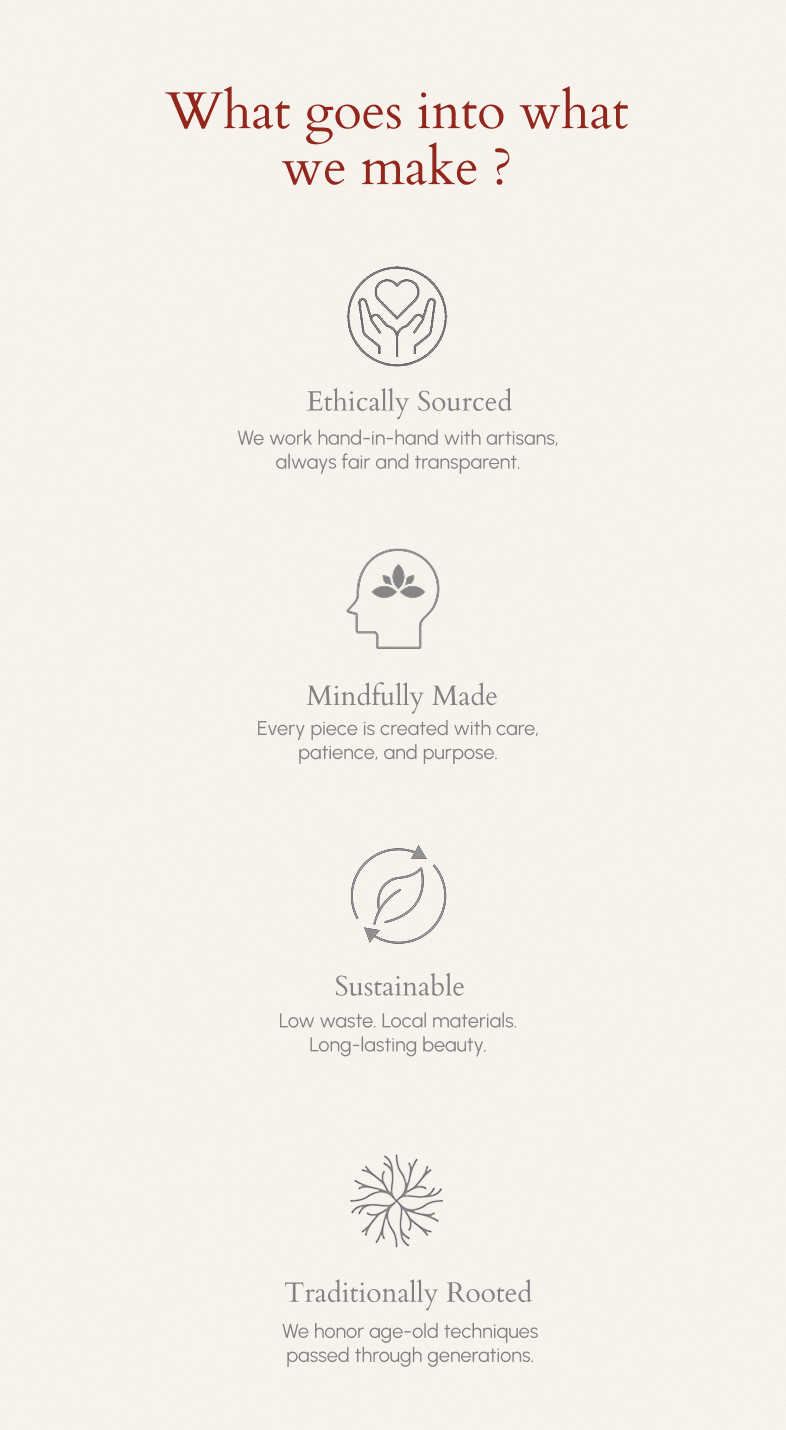
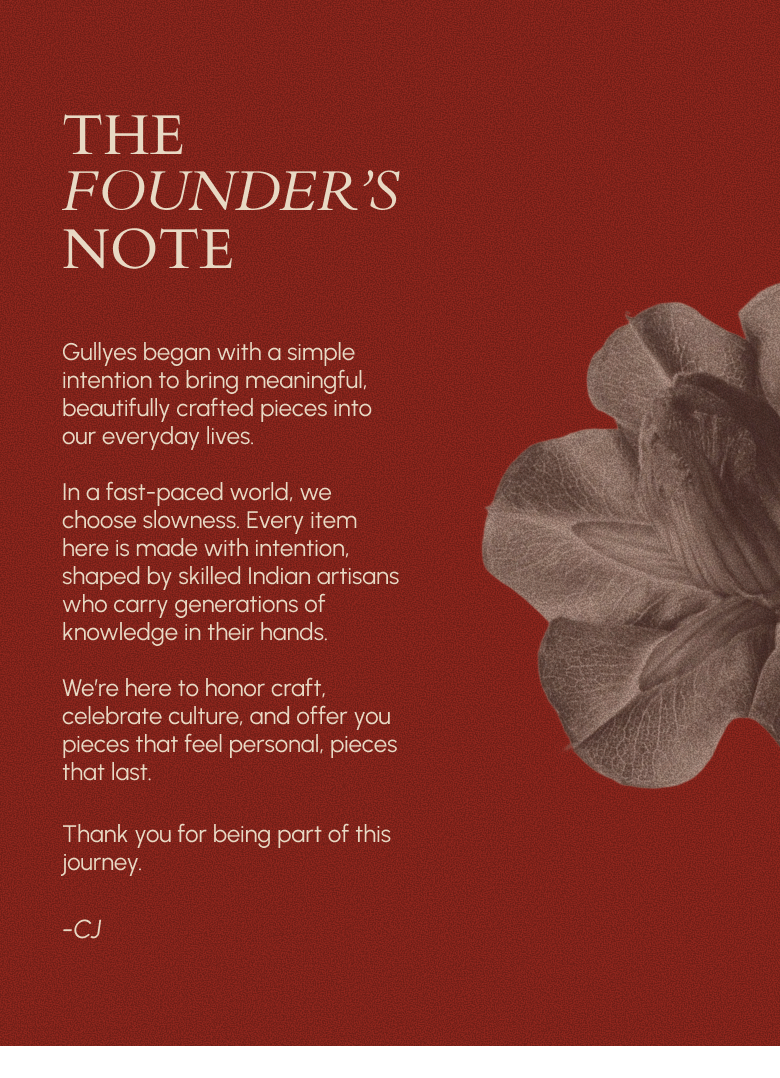
The house of Gullye
Slow by hand.
Heirloom objects from the workshops of South Asia, made in editions, never in factories.
The Cayenne
The chili pepper has crossed more borders than any other ingredient, from the Americas to every kitchen in the world in two hundred years. This bag carries that same energy: a cream ground with red and green hand-beaded chilis, the kind of piece that starts a conversation before you say a word.
10% off your first piece. Join the list and we'll send your code.
Check your inbox. Your code is on its way.
Gullye makes sculptural pieces by hand, in small editions, with master artisans in Jaipur. Once an edition sells out, it is retired.
The specification
The Cayenne is hand-beaded on a cream cotton ground, and light grounds need more care. Spot clean only, pressing a soft damp cloth gently against the exterior. Do not rub across the beaded surface, which can loosen stitches, and do not machine wash, hand wash, tumble dry, or dry clean. Keep ink, makeup, and perfume off the cream fabric, and avoid snagging the beads on rough surfaces or jewelry. Store flat in the Gullye dust bag.
In confidence

Columbus reached the Caribbean in 1492 looking for black pepper. What he found instead was the chili, something entirely new, which he carried back to Europe by mistake. Within fifty years it had spread to Africa, Asia, and India; within a hundred, whole cuisines were built around it as though it had always been there. No ingredient in history has crossed more borders more completely.
From the same atelier