Wedding Guest Jewelry: What Survives the Day

Wedding guest jewelry has to do more than look right in the mirror. It has to survive being photographed from every angle, hugged by forty people, worn through two hours at a table and a night of dancing, which is why the pieces that work are chosen for behavior as much as for looks.
Most advice covers how earrings and a bag look together standing still. This is about the rest of it.
In photographs, small and shiny beats large and matte
You will be photographed more than you expect, and rarely with warning. Camera flash flattens texture and exaggerates shine, so a large matte piece can disappear into your outfit while something small and reflective reads clearly from across a reception hall.
This is the argument for a piece that moves. Light finds a moving surface at more angles than a still one, which is why drop earrings tend to photograph better than a stud of the same size, and why an unlit corner of a venue is less of a problem than it looks.
Two ways to wear it
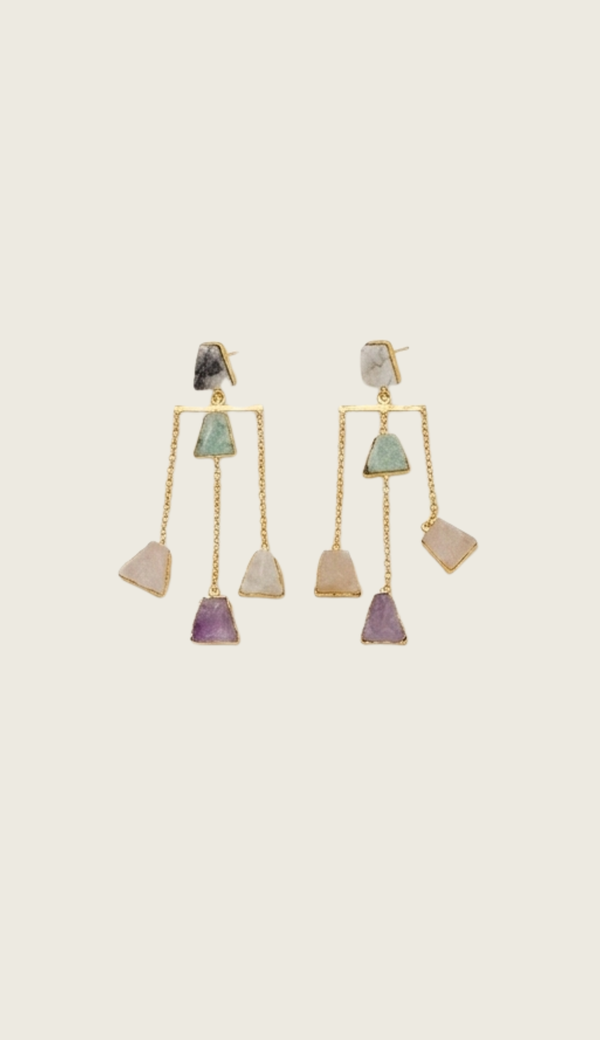


If you want the earrings to be the thing people remember, choose length and movement. The Terrace Chandelier Earrings hang three chains of different lengths from a brass bar, each ending in a wedge of agate, so they rearrange themselves every time you turn your head. They are built to be seen across a room.
If your dress is already doing the talking, go the other way. The Jasmine Studs sit close to the ear at about half an inch, a five-petal flower in gold vermeil with a deep green glass stone held in place by the gold itself, pressed around its edge rather than glued. Small, bright, and impossible to catch on anything.
Hugging, and the fact that your hair is down
A wedding involves an unusual amount of embracing, most of it with your hair loose. Two practical things follow.
First, check the backs. A butterfly back on a post is the one that stays put; a hook is the one you find on the floor at midnight. If you wear hooks, it is worth pushing them closed slightly with your fingers before you leave.
Second, think about what a strand of hair can catch on. Open filigree, fine chains and anything with a hook or a gap will collect hair through the evening. Solid forms and closed settings will not. This is the least glamorous consideration on this page and the one most likely to matter by hour four.
Dancing changes the calculation
Weight is what you notice after two hours, not two minutes. A long earring that felt fine at the ceremony can pull by the time the music starts, and the fix is usually distribution rather than size: several small elements on a chain move freely and stay comfortable, while one heavy pendant at the end of a drop concentrates all of its weight on the lobe.
Drop length matters too. Anything past the collarbone will land on your shoulder when you turn, and swing into your neck when you move quickly.
The bag has to do two jobs
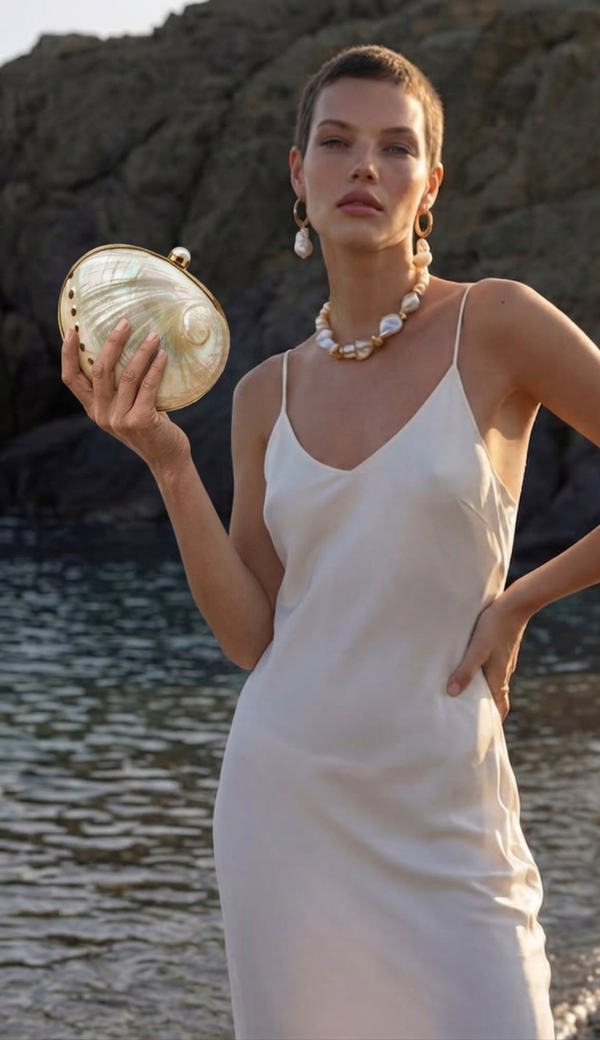
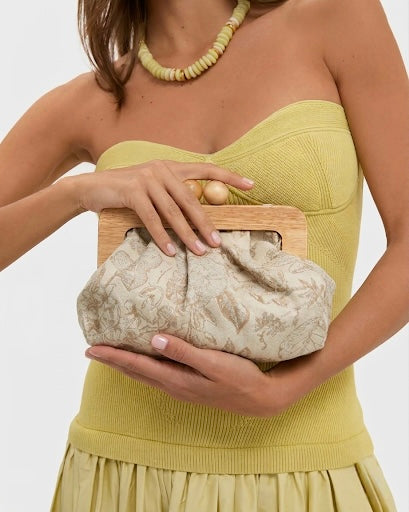
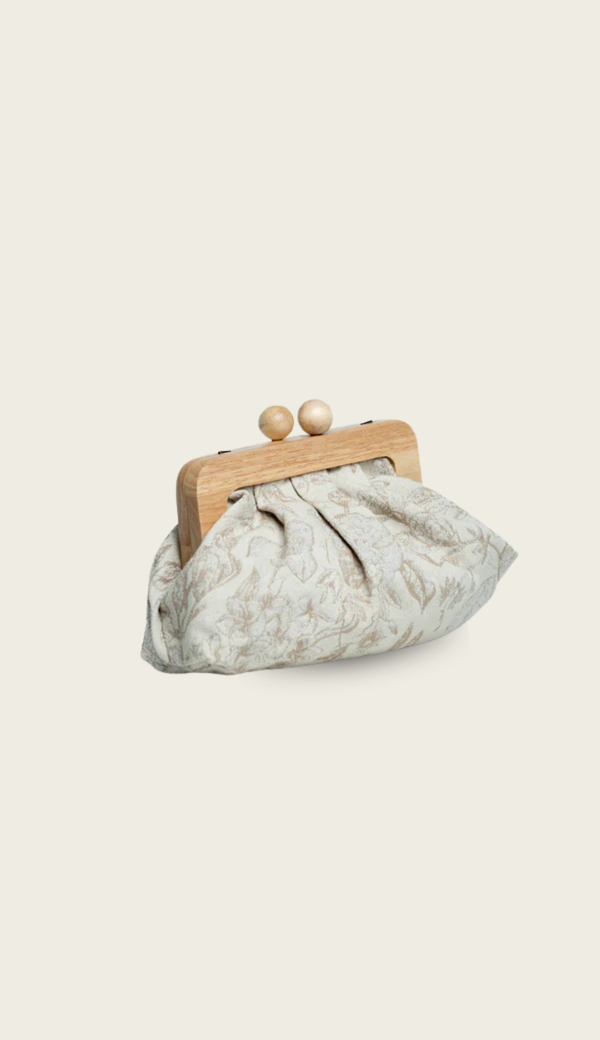
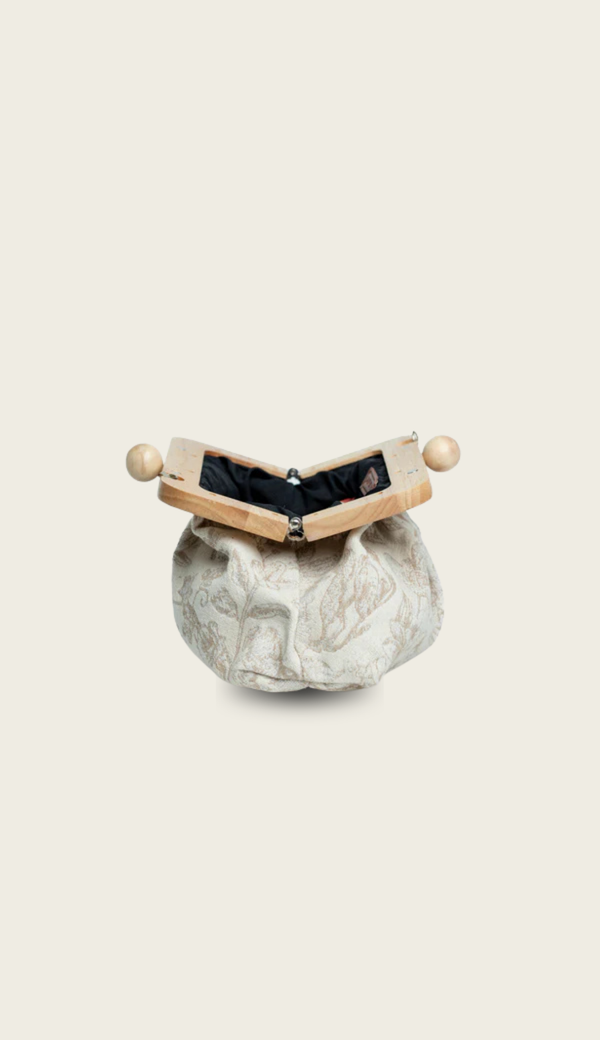
At a wedding a clutch is asked to be visible when you carry it and invisible when you do not. It sits under a chair for two hours, gets set on a table during dinner, and has to be picked up one-handed while you hold a drink.
So it needs to close properly and to hold its shape when you put it down. A soft pouch collapses and spills; a structured piece does not.
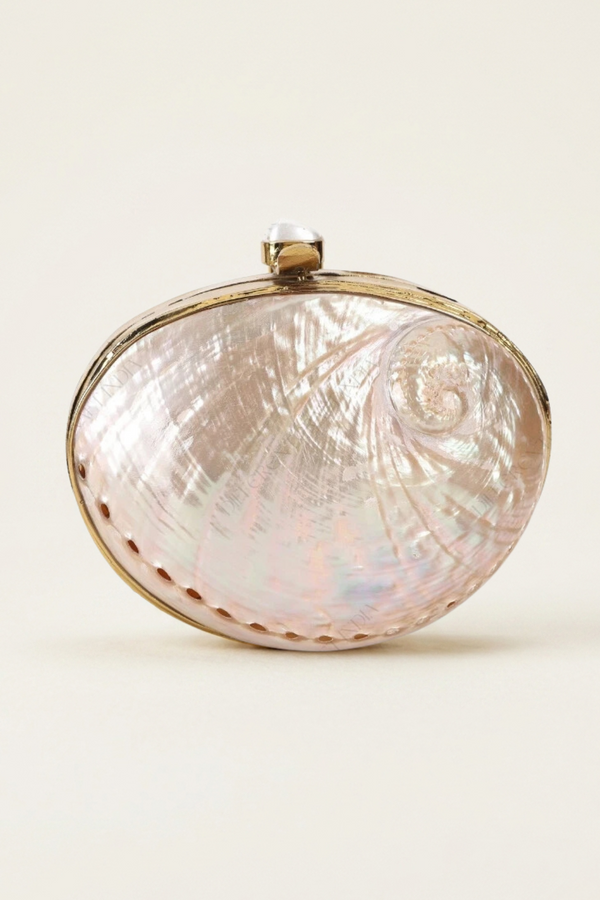
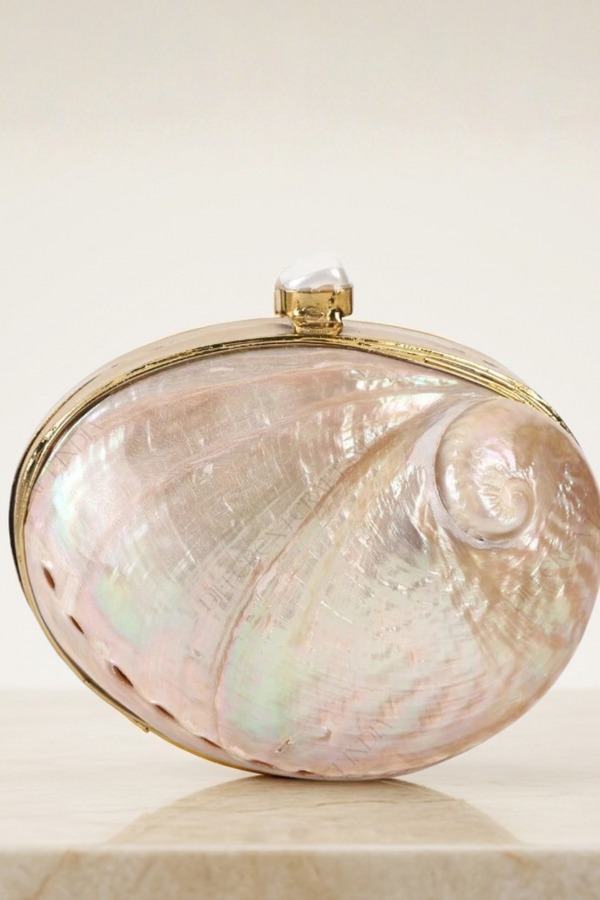
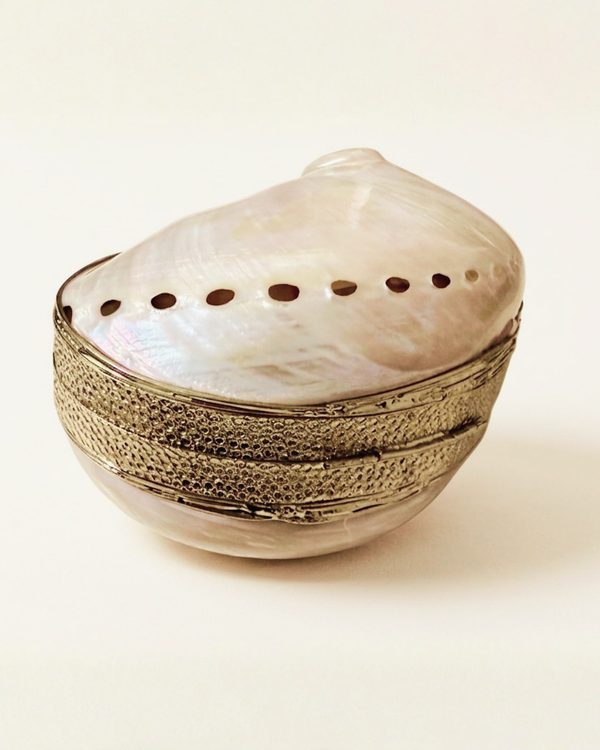
For the version that gets noticed, the Éclat is a small oval of mother-of-pearl, about six inches, and it behaves differently from metal in a room full of light: shell bends and splits light rather than bouncing it back, so it throws colors that were not there a moment before.
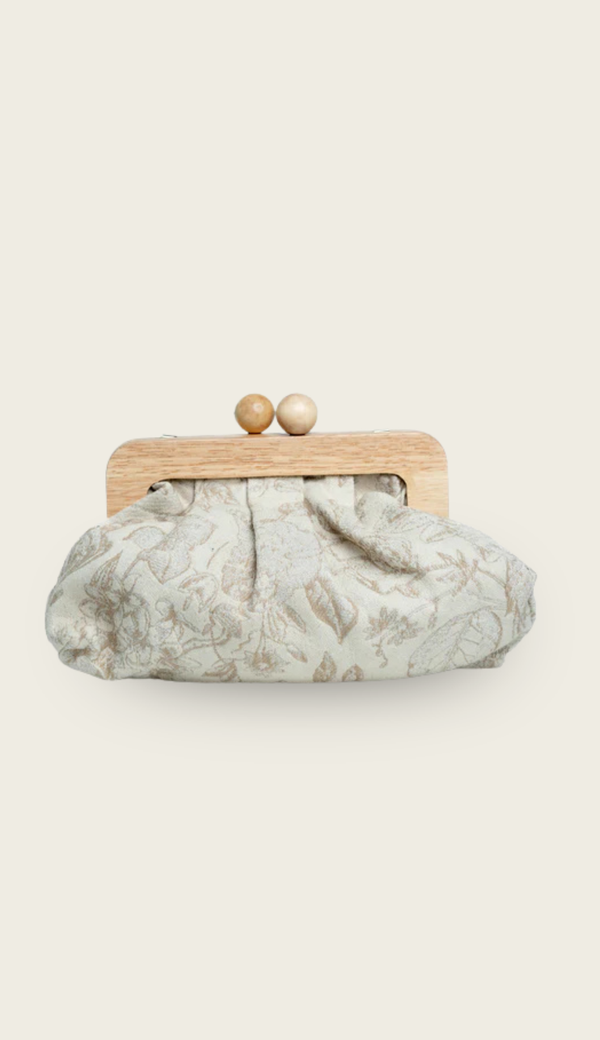
For the version that stays quiet, the Oyster is a gathered dome clutch in soft silver-grey jacquard on a natural wood frame. It is the most self-effacing bag we make, which is exactly what you want when the earrings are already the event.
Much of the jewelry here is made in very small numbers, often a single pair at a time, so a piece you like now may not be there in a month. That is a consequence of how it is made rather than a reason to hurry.
And you are not the bride
The old advice was to stay quiet so as not to compete. The more useful version is narrower: avoid anything that reads as bridal rather than simply festive. In practice that means white or ivory, obviously, but also veil-adjacent sparkle around the face and anything that could be mistaken for a tiara in a photograph.
Color, movement, a real statement earring: all fine, and none of it competes with a bride. What competes is looking like a second one.
Before the invitation arrives
The pieces that pass all of this, light enough to dance in, closed enough not to catch, structured enough to set down, are collected here:
Related reading: How to Pair Statement Earrings With a Clutch · "Black-Tie Optional," Decoded
Frequently Asked Questions About Wedding Guest Jewelry
What earrings photograph best at a wedding?
Something small and reflective usually reads more clearly than something large and matte, because flash flattens texture and exaggerates shine. A piece that moves catches light at more angles than one that stays still, which is why drop earrings tend to photograph well.
Will long earrings get in the way if I am dancing?
Weight matters more than length. Several small elements strung on a chain move freely and stay comfortable for hours; one heavy pendant at the end of a drop concentrates its weight on the lobe. As a rule of thumb, anything hanging past the collarbone will land on your shoulder when you turn your head.
Is statement jewelry appropriate for a wedding guest?
Yes. The line to avoid is not boldness but anything that reads as bridal: white or ivory, veil-adjacent sparkle around the face, or anything that could be mistaken for a tiara in a photograph. Color and movement do not compete with a bride.
Carry the wedding edit
Made by hand in small editions. Once an edition sells out, it is retired.
Shop all the wedding edit →