The Geode
10% off your first piece. Join the list and we'll send your code.
Check your inbox. Your code is on its way.
Someone will ask. Someone always does.
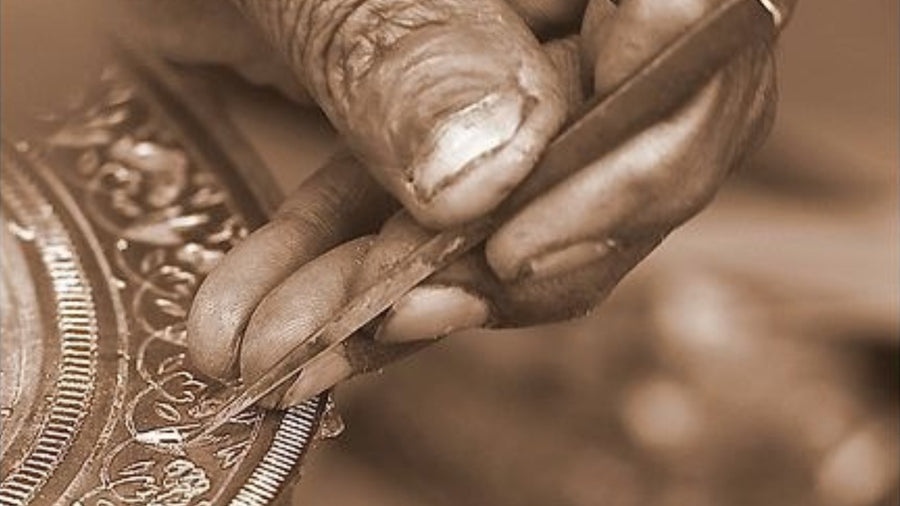
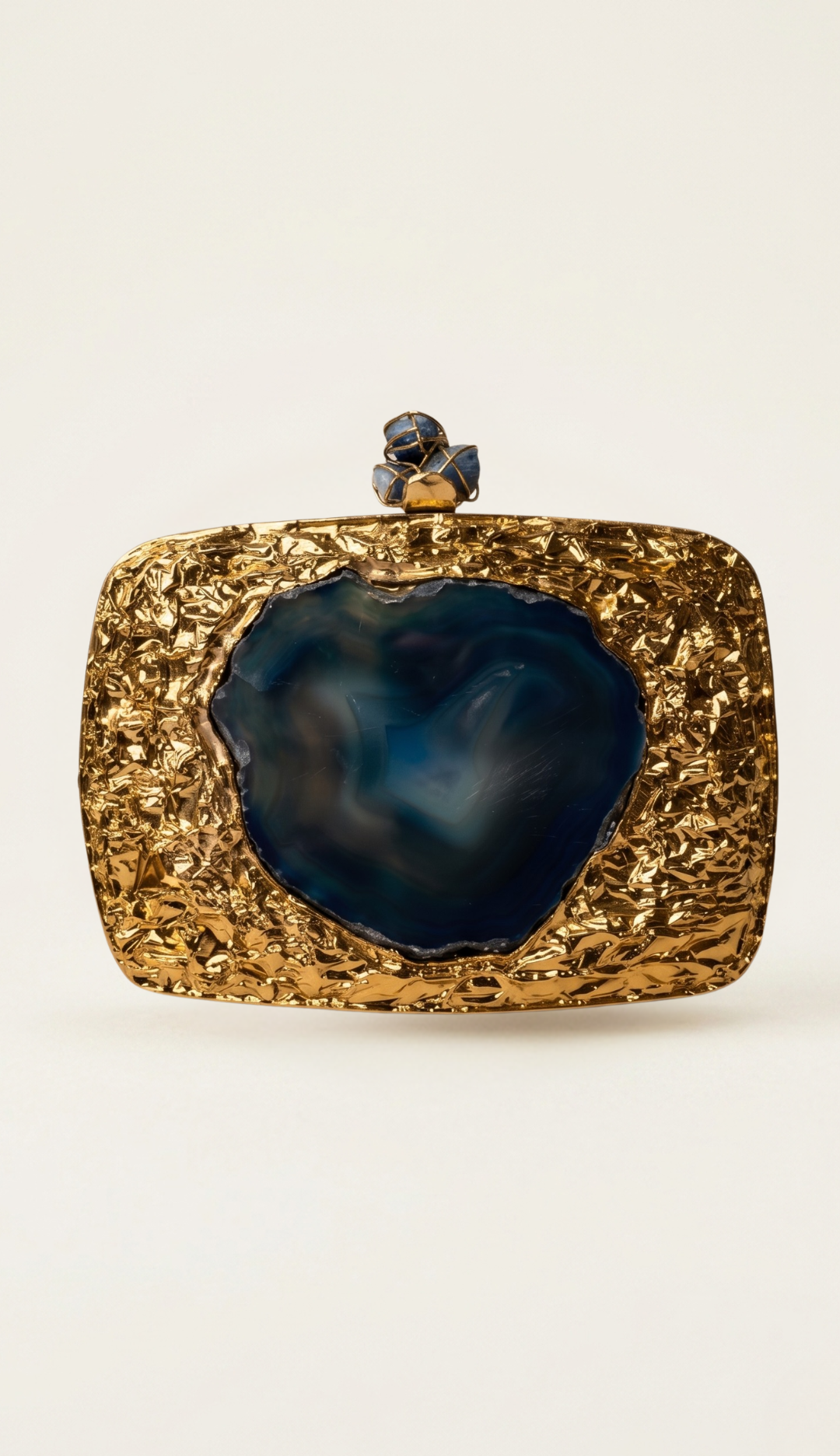
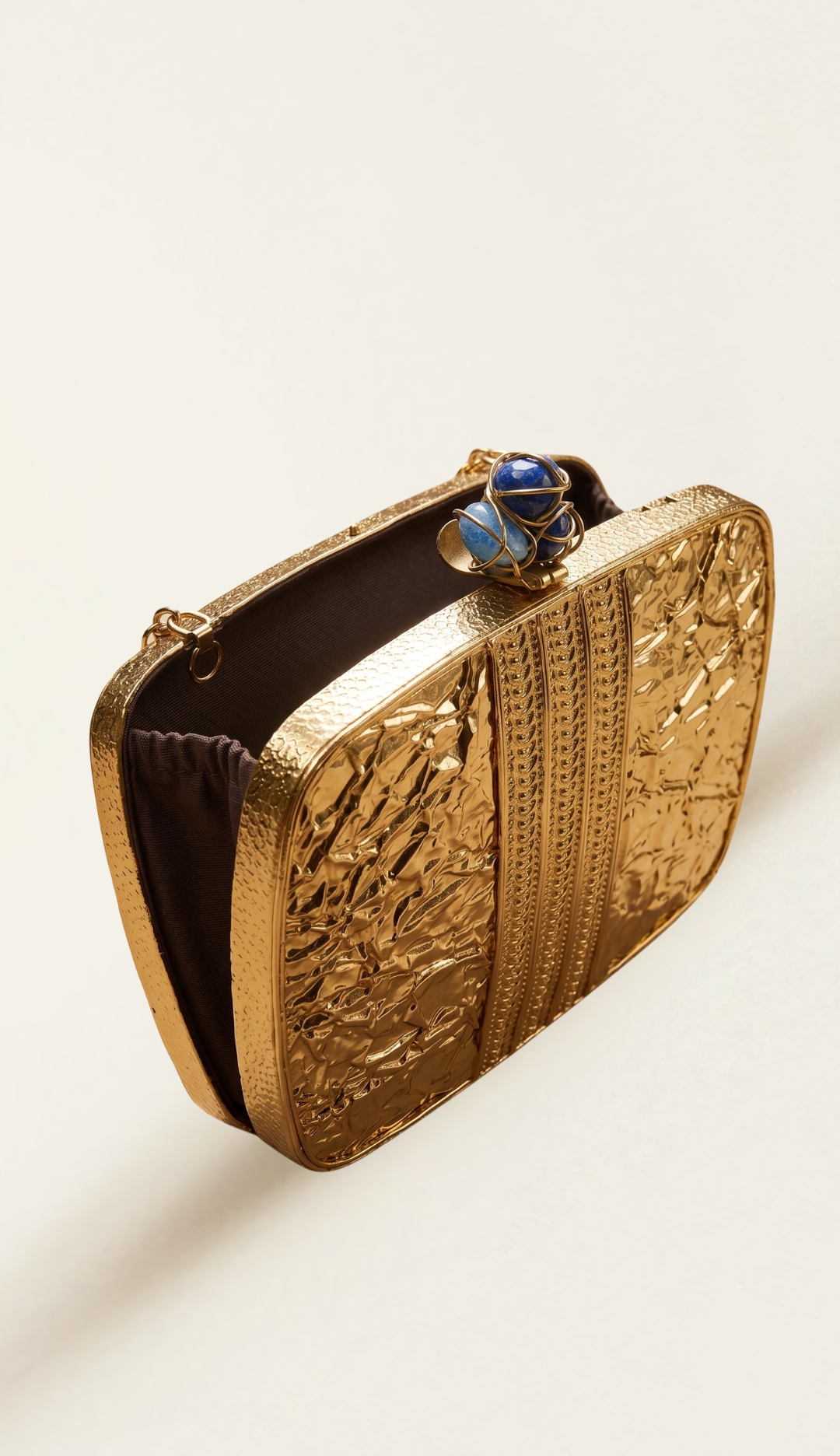
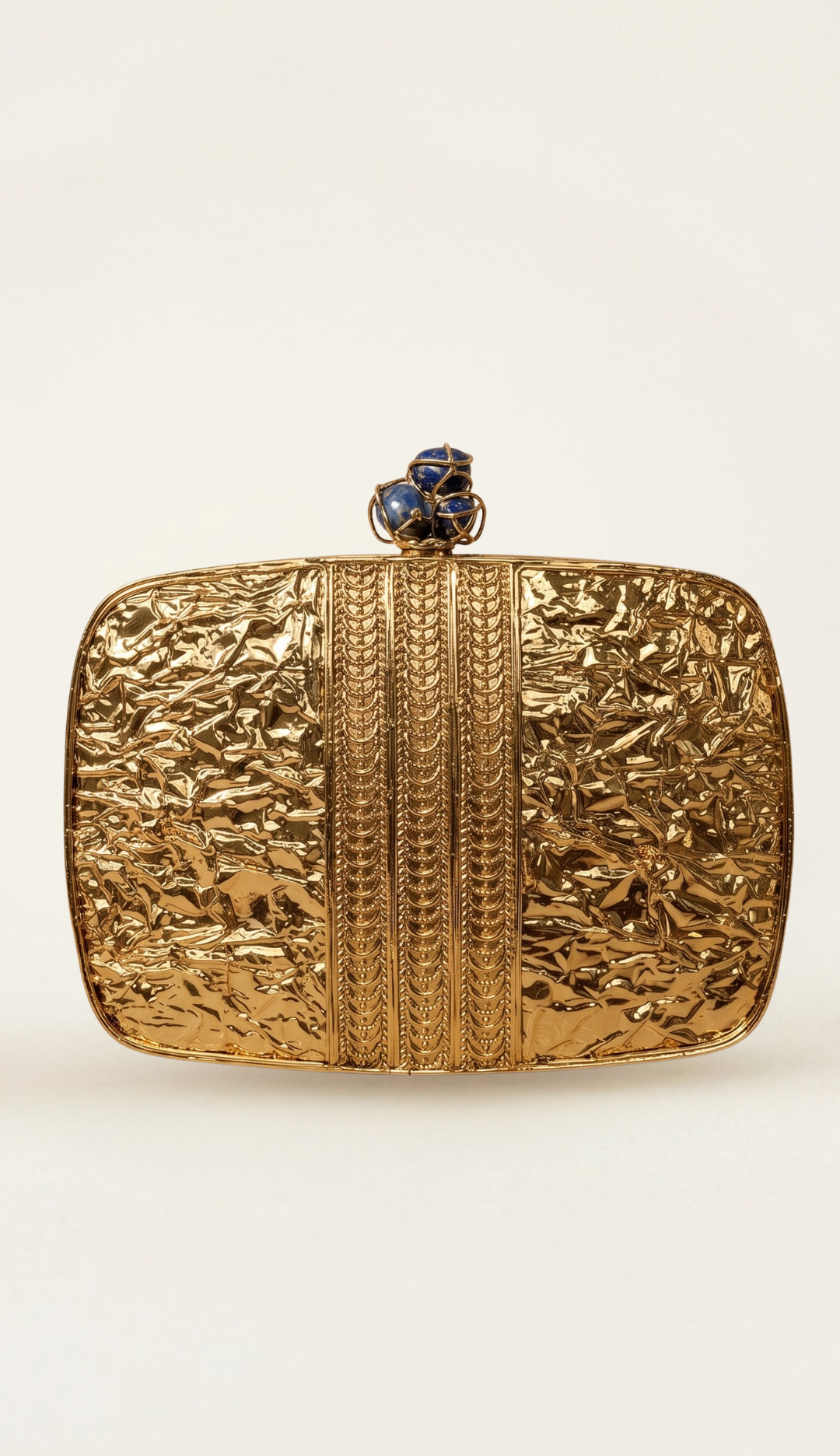
A geode forms over millions of years inside a pocket of volcanic rock, as mineral-rich water fills the hollow layer by layer with banded agate. This clutch is built around one of those stones. The brass is cast and hammered by hand; the blue agate is cut, polished, and set by hand. Two slow crafts in one object.
- Exterior
- Hand-cast brass, hammered and textured
- Stone
- Natural blue agate slice, set by hand into the front
- Clasp
- Blue agate cluster closure, hand-set in gold-tone brass
- Back
- Hand-worked decorative brass braid
- Interior
- Navy lining
- Dimensions
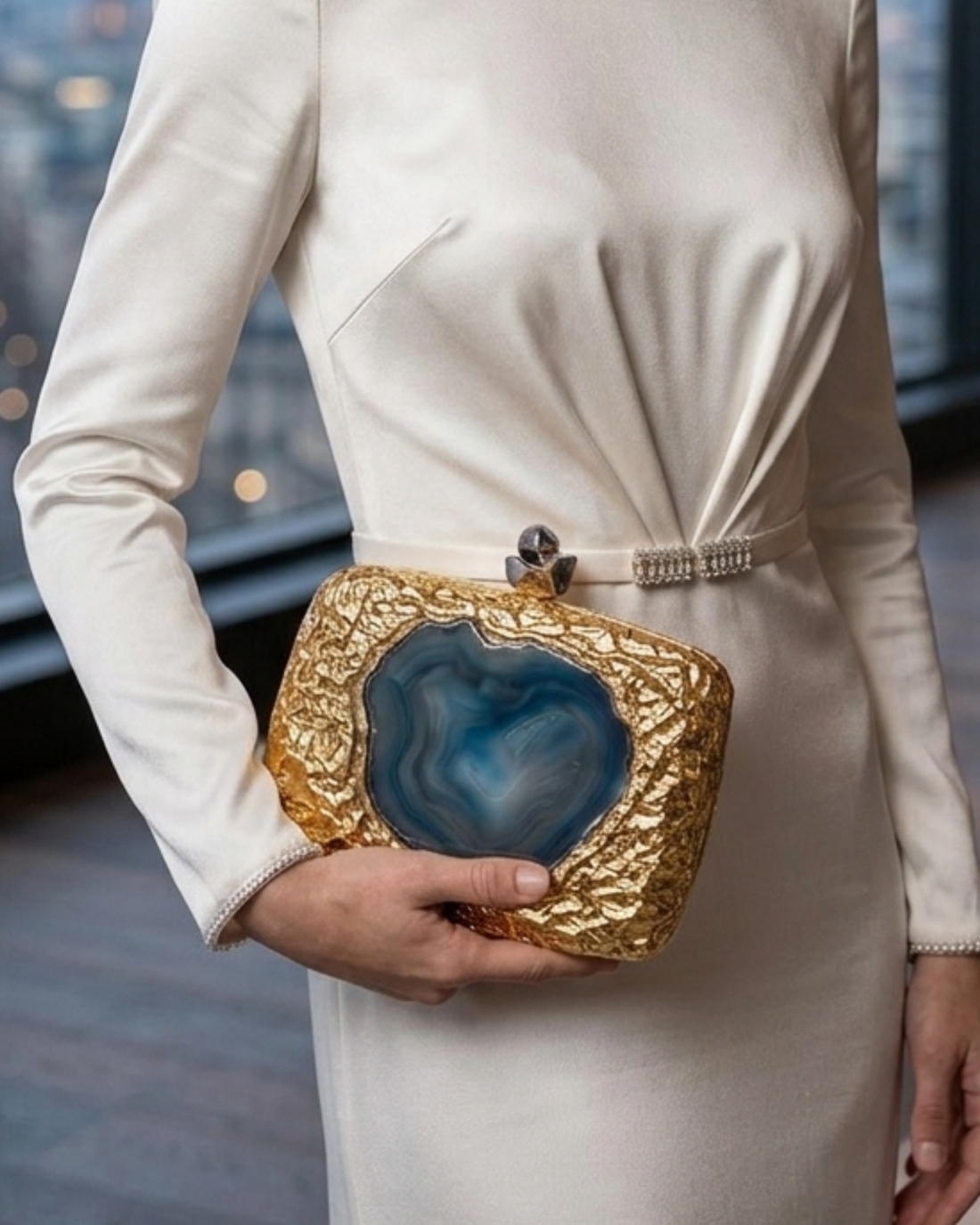
- 7"L × 1.5"W × 5"H
- Chain
- Gold-tone brass, 20" drop, detachable
- Technique
- Lost-wax cast brass, hand-hammered finish
- Origin
- Handmade in India
- Production
- Small batch, each with its own agate
Dispatched within 1 to 2 business days by FedEx Ground, arriving in 2 to 7 days across the U.S. Your tracking follows the moment it leaves us. Should it ever need to come home, you have 30 days from delivery.
Is the agate real?
Yes. The blue agate is a natural stone slice, not synthetic, resin, or printed. It was cut from a real agate geode, polished to show the interior banding, and set by hand. The patterns, the cavity at the center, and the color are exactly as the earth made them.
Is every Geode the same?
No. Each is built around its own agate slice, and because no two agates are alike, no two Geodes are. The brass casting can be repeated; the stone in yours exists nowhere else.
What is the blue color in the agate?
The teal and blue come from trace minerals, mostly iron and copper, laid down in the stone's layers as it formed. The exact shade depends on the water that passed through the rock over millions of years, so no two are the same.
How do I wear it?
It comes with a detachable gold-tone brass chain with a 20" drop for shoulder or crossbody wear. Remove the chain to carry it as a clutch. At 7" wide and 5" tall it holds cards, folded cash, lipstick, keys, and a compact phone.
The story
The blue agate here carries that record. The bands are not decoration; they are time, made visible. The deepest teal at the center was laid down first, the lighter rings later. The small natural cavity at the heart is the space the water never quite filled, where the stone was still becoming itself when it was found.
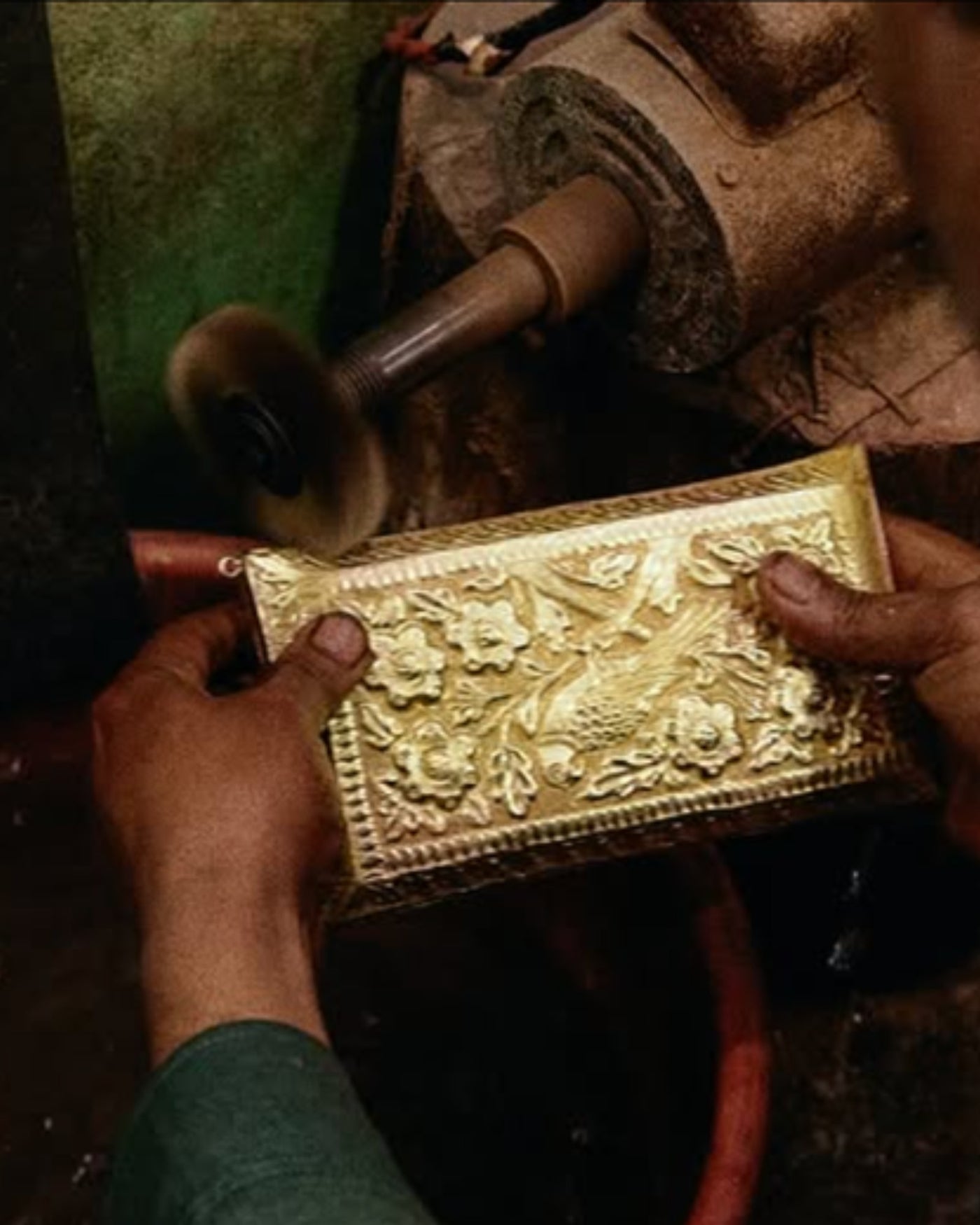
The brass around it is cast by the lost-wax method, one of the oldest ways to work metal: a wax model is carved by hand, encased, fired until the wax burns away, and filled with molten brass. The hammered texture is worked in by hand afterward, mark by mark. The braid on the back is a separate piece of brass, twisted and applied by hand.
Stone and metal, each worked slowly by hand, in one object. Because every agate is different, no two are ever quite the same.
Millions of years in the making. Yours to carry.
You may also like
Recently viewed
A little welcome
Complimentary U.S. shipping on every order
30-Day Returns
No questions asked
Authenticity Guaranteed
Genuine shell & hand-cast brass
Secure Checkout
Encrypted payment

What is Gullye
Gullye finds its soul in the forgotten lanes, where quiet hands shape beauty that the world often overlooks. We bring these stories forward not as relics of the past, but as living treasures meant to be cherished.
The house of Gullye
Slow by hand.
Heirloom objects from the workshops of South Asia, made in editions, never in factories.
The Geode
Someone will ask. Someone always does.
A geode forms over millions of years inside a pocket of volcanic rock, as mineral-rich water fills the hollow layer by layer with banded agate. This clutch is built around one of those stones. The brass is cast and hammered by hand; the blue agate is cut, polished, and set by hand. Two slow crafts in one object.
10% off your first piece. Join the list and we'll send your code.
Check your inbox. Your code is on its way.
Gullye makes sculptural pieces by hand, in small editions, with master artisans in Jaipur. Once an edition sells out, it is retired.
The specification
The Geode pairs metal and natural stone, so treat it gently. Wipe the brass with a soft dry cloth. Wipe the agate with a barely damp cloth and dry it right away. Avoid dropping it, since impact can fracture natural stone, and keep it away from chemical cleaners and prolonged sunlight. Store in the Gullye dust bag.
In confidence
Agate does not form quickly. It begins inside a bubble of volcanic rock, a cavity left by a gas pocket in cooling lava millions of years ago. Over time, mineral-rich water seeps in and deposits itself in microscopic layers on the walls, each layer a different moment, a different temperature, a different composition of the water passing through. The layers build inward until the hollow fills with banded stone. Every agate is a geological record that exists nowhere else.
From the same atelier